








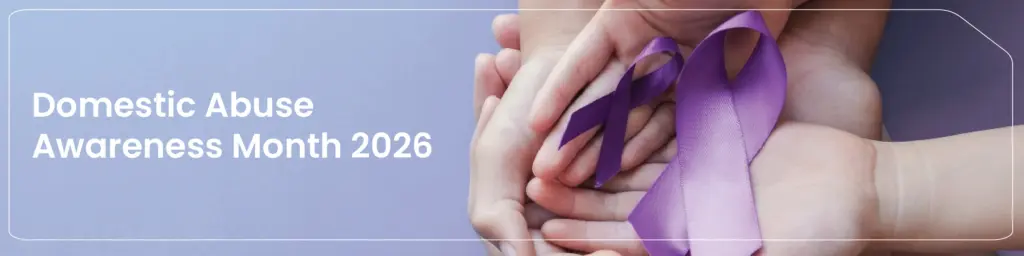
Domestic Abuse Awareness Month 2026
Domestic abuse continues to be surrounded by widespread myths and misconceptions, many of which are simply untrue. As a part of domestic abuse awareness month, Serena Djiakouris a solicitor at Goodman Ray from our domestic abuse team explores the common myths to promote a greater understanding of the realities of domestic abuse.
The Myth of “Domestic Abuse Is Limited to Physical Abuse”
One of most common misconceptions is that domestic abuse is limited to physical abuse. Without physical abuse and visible injuries, behaviour can be wrongly identified as ordinary conflict that may occur within any relationship.
Domestic Abuse Takes Many Forms
In reality, physical domestic abuse is only one form of the abuse that can occur within a relationship. Domestic abuse comes in many different forms including (but not limited to) emotional abuse, psychological abuse, sexual abuse, financial abuse and coercive and controlling behaviour. It is relatively rare for physical abuse to take place in isolation, and it can often include a pattern of behaviour.
Coercive and Controlling Behaviour
With the implementation of the Lei sobre o abuso doméstico de 2021, coercive control obtained statutory footing for the first time, being recognised as a form of domestic abuse. Coercive control is defined as “an intentional pattern of behaviour that occurs on two or more occasions, or which takes place over time, in order for one individual to exert power, control or coercion over another” – Home Office, 2023. Types of common behaviour include a perpetrator dictating what a victim is able to wear, isolating a victim from their family and friends, monitoring a victim’s mobile devices, and/or preventing a victim from making their own decisions.

Contact our Domestic Abuse Solicitors Today
Please call or email our team today for more information and a no obligation call.
The Myth of “It Can’t Be That Bad if the Victim Has Not Left the Relationship”
This is another common misconception that a victim would only leave the relationship if the circumstances were that bad. Actually, in reality, victims decide to stay in a relationship for many different reasons.
Financial Dependence Can Make Leaving Difficult
The victim may be financially dependent upon their partner, without their own income and unaware of any immediate financial protection available to them. By leaving the relationship, there is a risk that the victim has nowhere to stay and no money for necessities such as food, housing and utility bills.
Children Can Create Additional Barriers to Leaving
Secondly, children may also be involved, creating an additional barrier to leaving the relationship. A victim may have been threatened by the perpetrator with losing contact with their children if they leave. It is also common for perpetrators to manipulate victims into believing that leaving the relationship would cause instability or emotional harm to the children, making them feel that remaining in the relationship is in their children’s best interests.
The abuse may also escalate when a victim attempts to leave the relationship, particularly where they are unable to leave successfully. In some circumstances, a victim may remain in the relationship because they are frightened of the potential repercussions and fear for their own safety and life. Their movements an communications may be closely monitored by their perpetrator, making them feel that leaving is not safe or realistic. The perpetrator may have also caused psychological harm to the victim’s self-esteem and confidence, meaning that a victim may be more apprehensive to reach out for support, fearing that they may not be believed or that without any evidence, nothing can be done.
The Myth of “You Would Be Able to Tell if Someone Is Being Abused”
Sadly, it is sometimes very difficult to identify domestic abuse. Monitoring someone’s devices, controlling their movements and deciding what they wear is unlikely to be obvious to the outsider. Without physical injuries, the abuse can be hidden in plain sight.
Domestic Abuse Can Be Hidden in Plain Sight
Victims may have been experiencing abuse for several years throughout a long-term relationship and as a result, they may have normalised the behaviour and unable to identify the warning signs. In the majority of circumstances, abuse takes place behind closed doors and does not happen in the presence of other people. A perpetrator may appear controlling and aggressive towards a victim within their home, whilst presenting an entirely different persona to those around them, appearing caring and charming. This can make it difficult for others to recognise what is happening behind closed doors.
Victims may also conceal the abuse or actively defend their partner, either because they are scared of the potential consequences or they still love their partner.
The Myth of “It Is a Private Matter Between a Couple. If Someone Really Wanted Help, They Would Ask for It.”
Whilst domestic abuse can take place in private, it is not a private matter. Domestic abuse impacts lots of different people and it is everyone’s responsibility to become informed about what it may look like, and the measures that are in place to help.
In summary, domestic abuse is rarely straightforward. However, what is clear is that domestic abuse is common, it comes in various different forms, and it is extremely serious.

More Domestic Abuse Awareness Month Articles
This month we are publishing four helpful articles on Domestic Abuse, each offering advice and guidance on how you can deal with domestic abuse. Whether it be you personally who is being subjected to domestic abuse, or whether it be a friend or family member, we hope these articles provide you with the information you need. For more information or to get help please contact us.
Article 1 – Practical Tips on How to Support Someone Struggling With Domestic Abuse
Article 2 – Creating a Domestic Abuse Safety Plan – What You Need To Know
Article 3 – Debunking The Myths of Domestic Abuse
Article 4 – COMING SOON – Healthy and Unhealthy Relationships – How to spot the warning signs
O que é o abuso doméstico?
O Lei sobre o abuso doméstico de 2021 defines domestic abuse as behaviour towards another person which is abusive. The parties must be aged over 16 or over and personally connected to one another.
The Act states domestic abuse can include, but is not limited to, the following:
- Physical or sexual abuse
- Violent or threatening behaviour
- Controlling or coercive behaviour
- Economic abuse
- Psychological, emotional or other abuse.
Support For Victims This Domestic Abuse Awareness Month 2026
Domestic Awareness Month helps to highlight the importance of looking out for instances of domestic abuse and to remember that help and legal protection may be available to those experiencing domestic abuse. At Goodman Ray, our specialist domestic abuse lawyers can advise on applying for a Domestic Abuse Protection Order (DAPO), an emergency injunction or a Non-Molestation Order.
If you or someone you know is experiencing domestic abuse, Goodman Ray can provide confidential, tailored legal advice about the protection that may be available. Contact our team by completing our online enquiry form or call 020 7608 1227 to discuss your circumstances.
Contacte-nos hoje
Se tiver alguma dúvida ou desejar obter aconselhamento jurídico sobre qualquer um dos tópicos acima referidos, não hesite em contactar-nos.
Ligue-nos para 020 7608 1227